
On-chain escrow and payout rails for a founder finance platform
Programmable escrow and stablecoin payout contracts cleared external audit with zero critical or high findings for a founder finance platform.
0 critical findings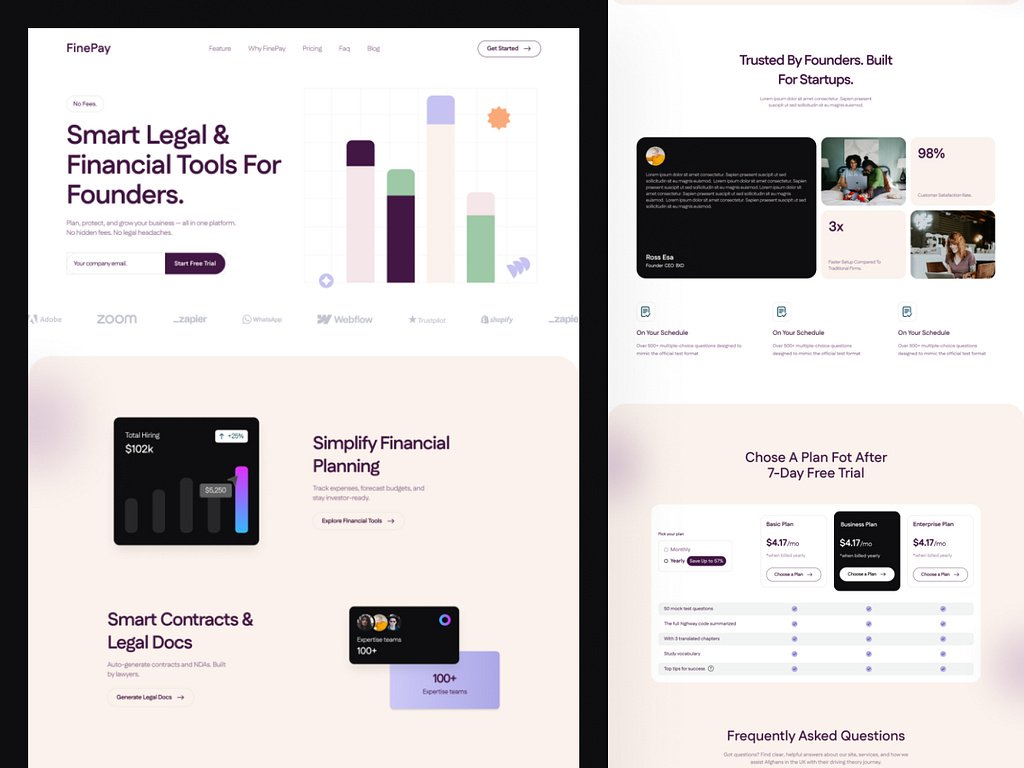
Problem, approach, and the outcome
The client is a UK fintech that gives startup founders the financial tooling to hold, release, and settle funds without waiting on manual banking steps. For a platform handling other people's money on-chain, the contracts are the product, and any weakness in them is a weakness in the whole business.
They needed escrow and payout logic that founders could trust with real balances, and that would stand up to the scrutiny of an external security audit before a single pound moved through it.
Founders wanted funds to release automatically on agreed conditions and invoices to settle in stablecoins, but the existing off-chain flow depended on manual approvals that were slow and hard to reconcile. Automating money movement raises the stakes: a bug in an immutable contract cannot simply be patched later.
The escrow logic also had to handle partial releases, refunds, and disputes without ever leaving funds trapped or double-spent. Each of those paths is an opportunity for an edge case that only surfaces once real money is at risk.
Above all, the contracts had to reach an external audit clean. A stack of critical findings would have meant a costly remediation cycle and a delayed launch, so security could not be an afterthought bolted on at the end.
We designed the escrow and payout contracts security-first, threat-modelling the money-movement paths before writing production code and building to OpenZeppelin patterns from the first commit. Modelling the adversarial paths up front is what keeps edge cases out of an immutable contract.
We used account abstraction to smooth the founder experience, letting funds auto-release and invoices settle without exposing users to raw key management. The programmable payout rails were deployed on Base for low, predictable settlement cost.
Every release, refund, and dispute path was covered by unit, invariant, and fuzz tests, backed by static analysis, so the contracts entered external audit with the evidence auditors expect already in hand. That groundwork is why the suite cleared audit without a single critical or high finding.
- Cleared external audit with zero critical or high findings
- Escrow and stablecoin payouts fully automated for founders
- Account abstraction removed raw key handling for users
- Invariant and fuzz coverage on every release and refund path
More Blockchain case studies

Tokenised property ownership for a premium real-estate platform
Fractional, permissioned ownership contracts with on-chain title records reached mainnet inside a tight launch window for a premium real-estate platform.
Read the full case study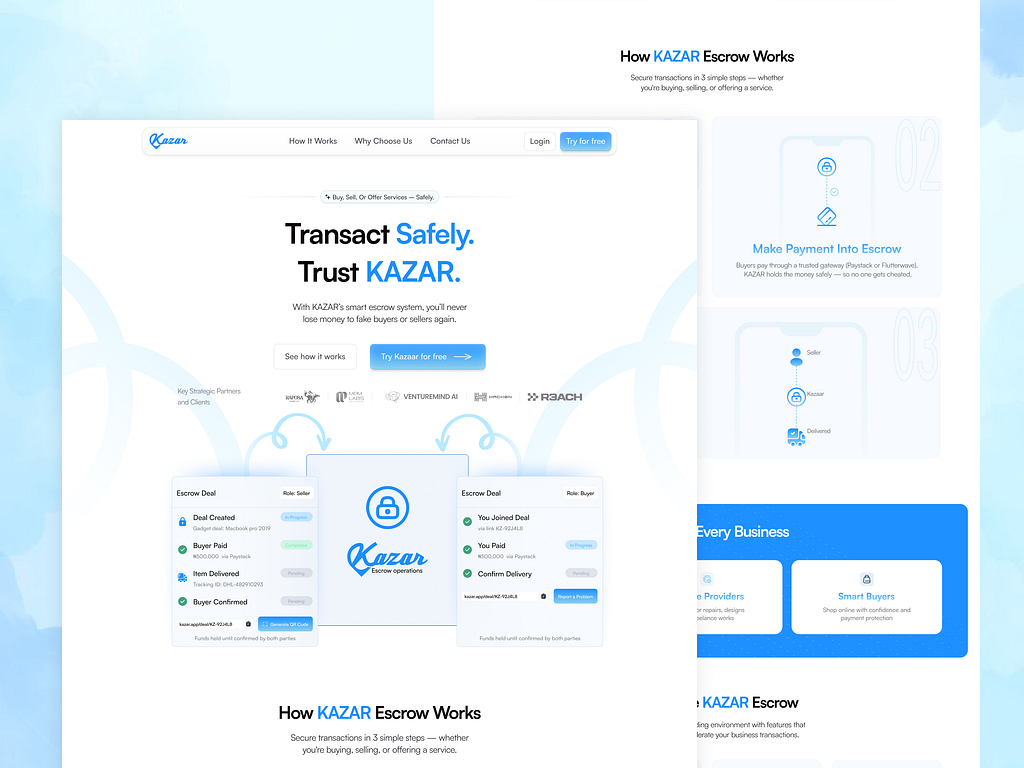
Trustless escrow contracts for a marketplace platform
Fuzz- and invariant-tested escrow that holds buyer funds until both parties confirm delivery meant no funds were ever left stuck for a marketplace platform.
Read the full case study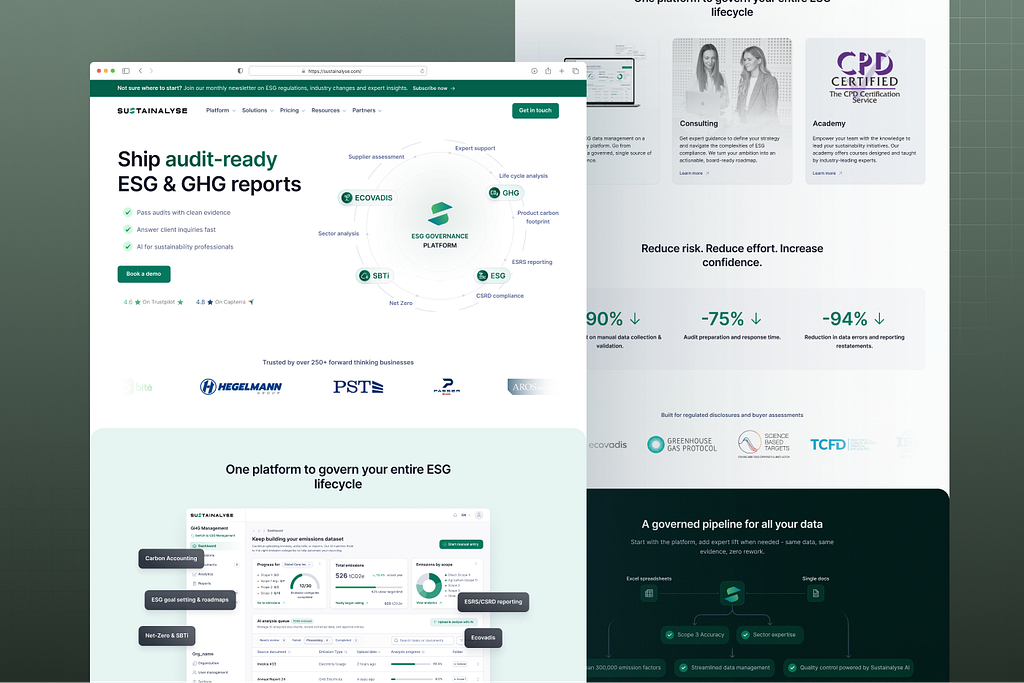
Tokenised carbon credits for an ESG reporting platform
On-chain carbon-credit issuance and retirement contracts gave auditors tamper-proof evidence and cut reporting data errors by 94% for an ESG reporting platform.
Read the full case studyGet a senior architect on the call, first time, every time.
No SDR gauntlet. 30 minutes with an engineer who can scope the problem, name the risks, and give you an honest feasibility call.