
Motor damage assessment from photos for an insurer
Settled 47% of motor claims from images alone, with fraud flags surfaced inline.
47%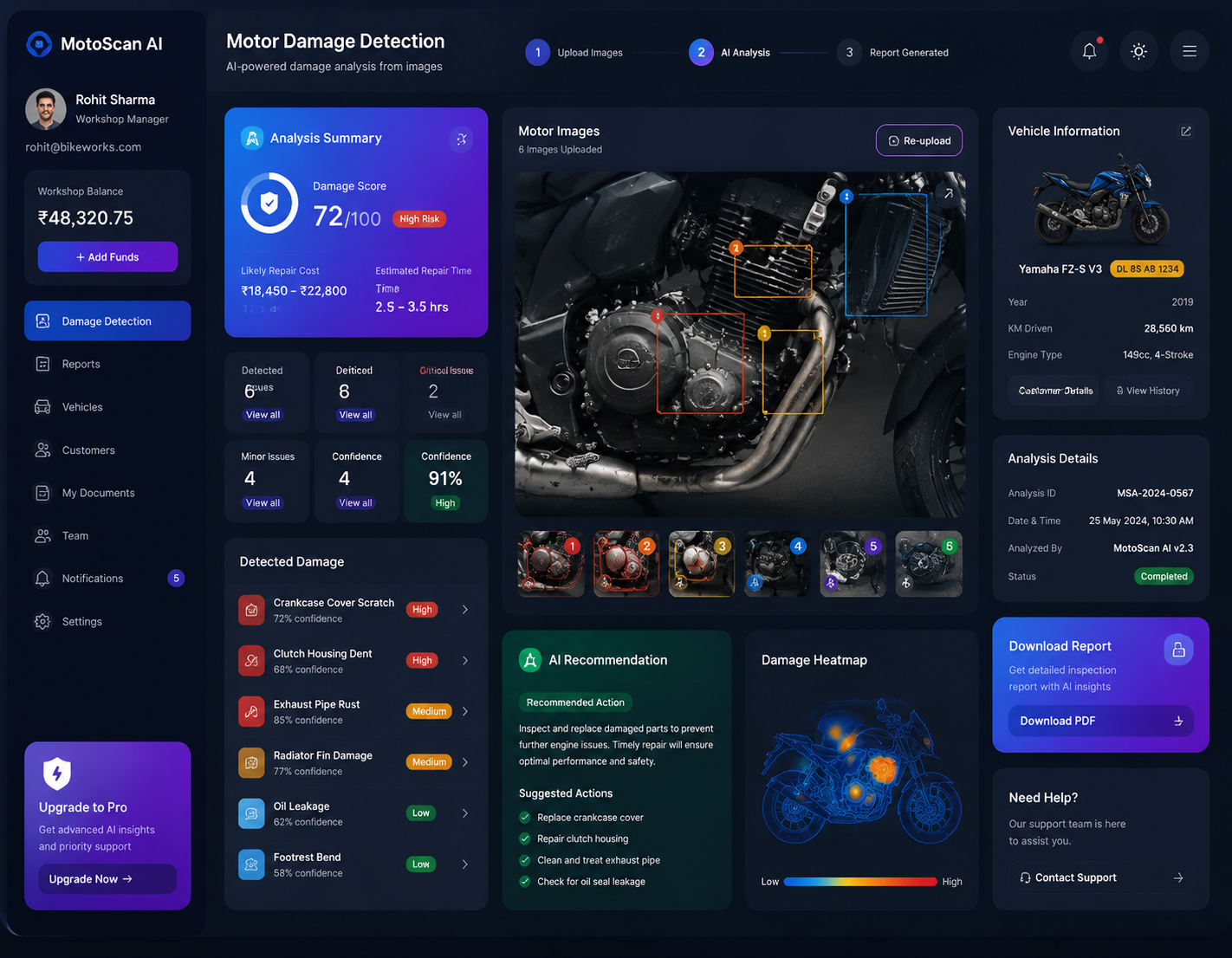
Problem, approach, and the outcome
The client is a UK motor insurer where claims experience is a major driver of customer retention, and every day a claim sits open costs money and goodwill. Speed and fairness in claims are core to how they compete.
They also faced persistent staged-damage fraud, which is hard to catch reliably by eye at the volume and pace their claims team operates.
Every motor claim waited on a physical assessor visit, adding days to settlement and cost to each file in a market where claims experience drives retention. The delay frustrated genuine customers at exactly the moment they most needed the insurer to perform.
Staged-damage fraud slipped through when photos were reviewed by eye, especially at volume when reviewers were under time pressure and inconsistencies were easy to miss. Fraud that gets paid is a direct loss and pushes up premiums for everyone.
The insurer needed to fast-track the routine cases without opening the door to leakage. Speeding up settlement and tightening fraud control usually pull against each other, and they needed both at once.
We built a vision model that grades damage severity and identifies affected parts directly from claimant photos, pricing straightforward cases straight through. The routine, honest claims (most of the volume) settle in hours instead of days.
The same model flags inconsistencies (mismatched damage, reused or manipulated images) at first notification, so suspicious files surface before money moves rather than after. Catching fraud early is far cheaper than clawing back a paid claim.
Low-confidence or high-value cases still route to a human assessor, keeping judgement where it belongs. We trained on the insurer's historical claims and shadow-tested against assessor decisions before going live, so the model earned trust against real outcomes first.
- 47% of claims settled from images alone
- Fraud inconsistencies flagged at first notification
- Average settlement time down from days to hours on routine claims
- Assessor capacity redirected to complex and high-value files
More AI & Machine Learning case studies
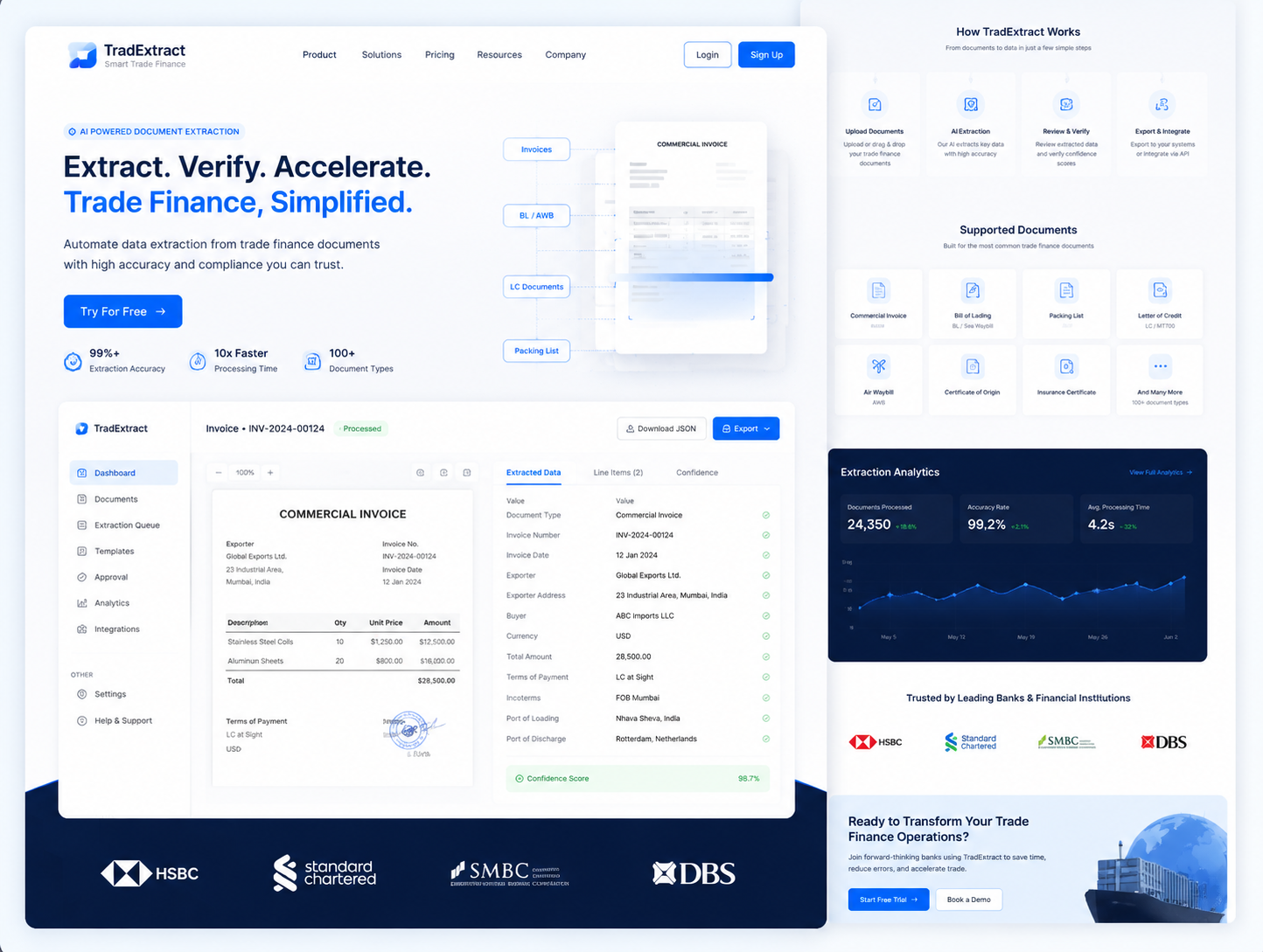
Shipping-document extraction for a logistics operator
Achieved 94% straight-through extraction on bills of lading and customs paperwork for a logistics operator.
Read the full case study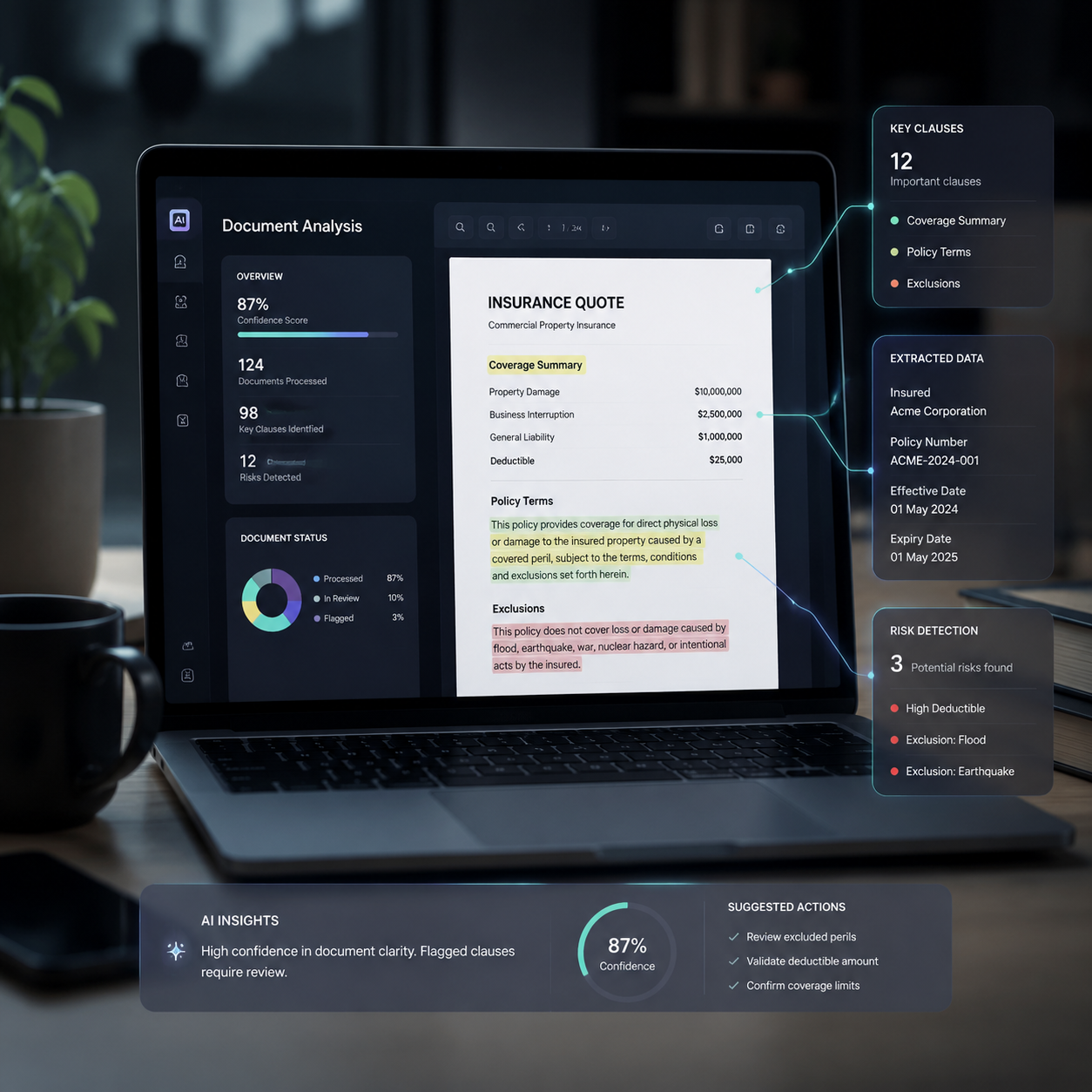
Underwriting copilot for a speciality insurer
Drafted first-pass quotes from submission packs 3.1x faster, every clause cited back to the wording it came from.
Read the full case study
Clause-level contract drafting for a commercial law firm
Cut first-draft time on regulated commercial contracts by 61%, each clause traceable to firm precedent.
Read the full case studyGet a senior architect on the call, first time, every time.
No SDR gauntlet. 30 minutes with an engineer who can scope the problem, name the risks, and give you an honest feasibility call.