
Clause-level contract drafting for a commercial law firm
Cut first-draft time on regulated commercial contracts by 61%, each clause traceable to firm precedent.
61%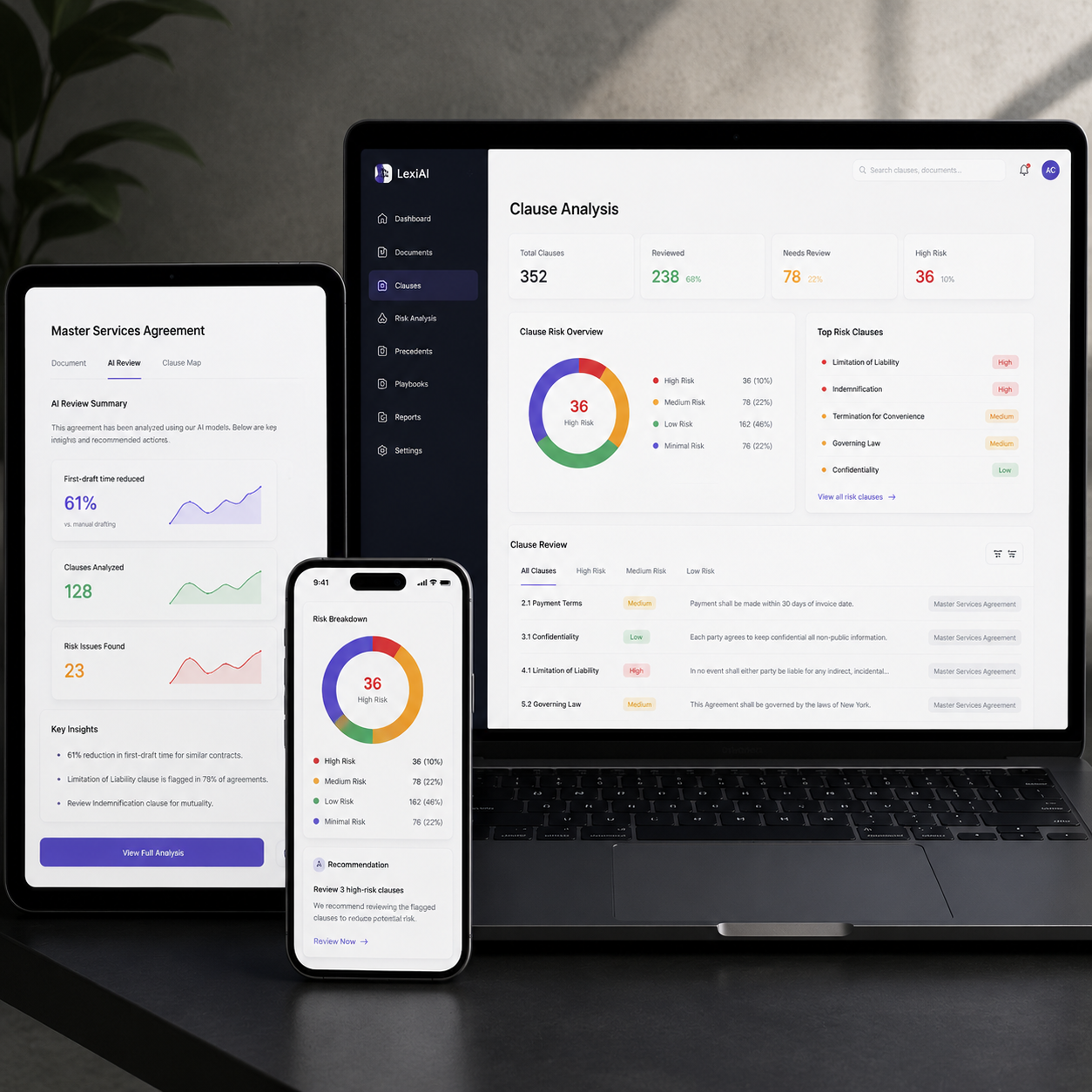
Problem, approach, and the outcome
The client is a mid-sized commercial law firm with a busy corporate practice, drafting high volumes of regulated commercial agreements for enterprise clients. Their reputation rests on precision and defensibility, so nothing ships that a partner cannot stand behind.
Associates carried heavy drafting loads, and the firm was acutely aware that chargeable hours spent rebuilding boilerplate were hours not spent on the judgement clients actually pay for.
Associates rebuilt the same contracts from scratch on every matter, burning chargeable hours on boilerplate that varied only at the margins. The work was repetitive, easy to get subtly wrong, and a poor use of expensive legal talent.
Partners, meanwhile, would not trust generated language they could not tie back to an approved precedent, and rightly so, in a practice where a single mis-drafted clause can create real liability. Earlier tooling attempts had stalled at the pilot stage precisely because they could not answer the question 'where did this wording come from?'
The firm needed speed without ceding the control and defensibility a regulated practice depends on. Any solution had to make provenance a first-class feature, not an afterthought.
We grounded drafting in the firm's own precedent bank rather than a general model, so every suggestion came from language the firm had already reviewed and stood behind. That single decision resolved the trust problem that had killed earlier attempts.
Each generated clause surfaced its source precedent beside it, and generation was locked to firm-approved playbooks per contract type. Associates edited in a familiar drafting surface while the system tracked provenance in the background, so the audit trail built itself.
We rolled it out on standard forms first, where precedent coverage was strongest and the wins were immediate, before extending to more bespoke matters. Partners were involved in shaping the playbooks, so the tool encoded the firm's house style rather than fighting it.
- 61% cut in first-draft time
- Every generated clause linked to an approved precedent
- Partner review time down by a third on standard forms
- Adopted across the corporate team within a single quarter
More AI & Machine Learning case studies
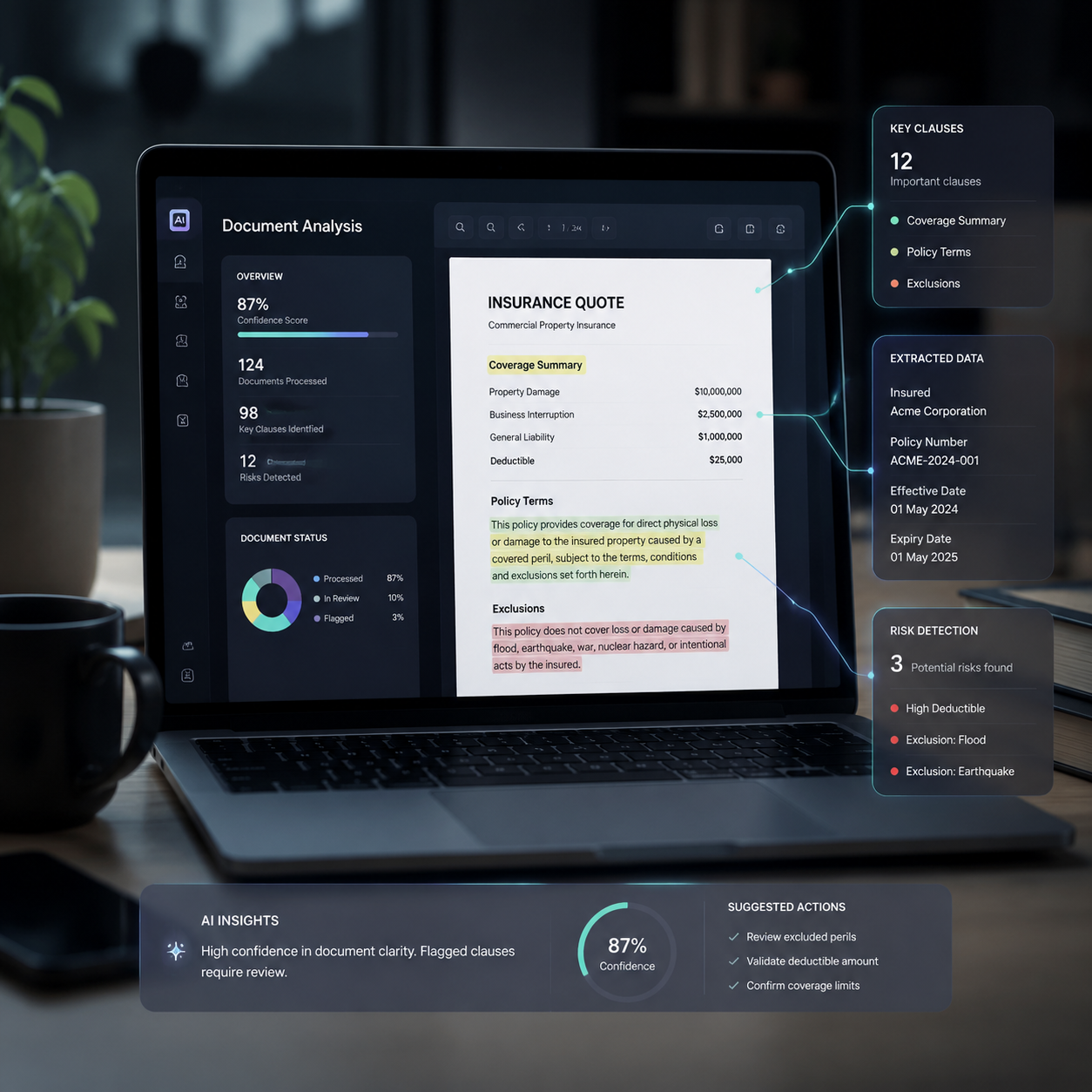
Underwriting copilot for a speciality insurer
Drafted first-pass quotes from submission packs 3.1x faster, every clause cited back to the wording it came from.
Read the full case study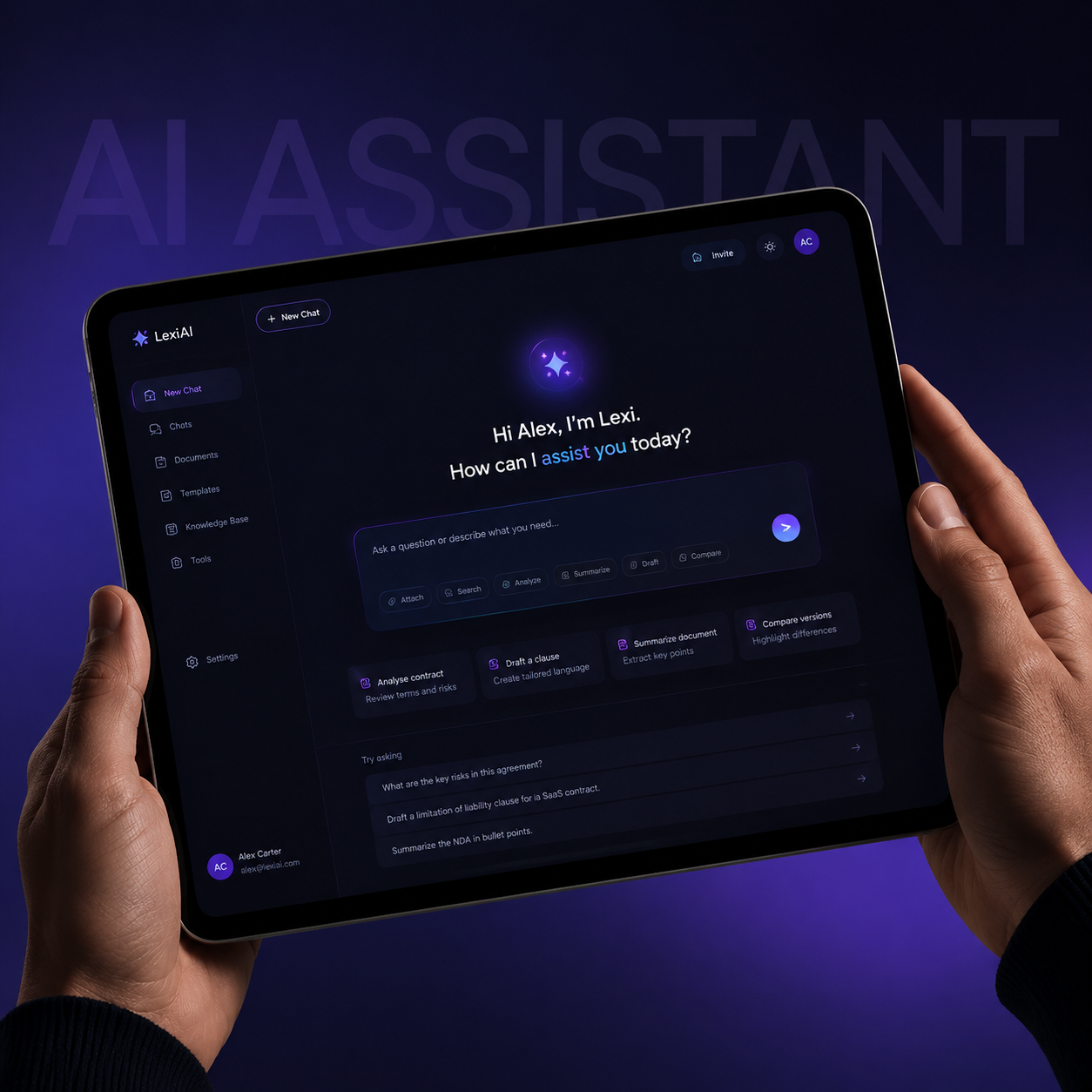
Grounded knowledge copilot for a retail bank contact centre
Cut average handle time 44% across 2,600 agents, with answers grounded in approved policy only.
Read the full case study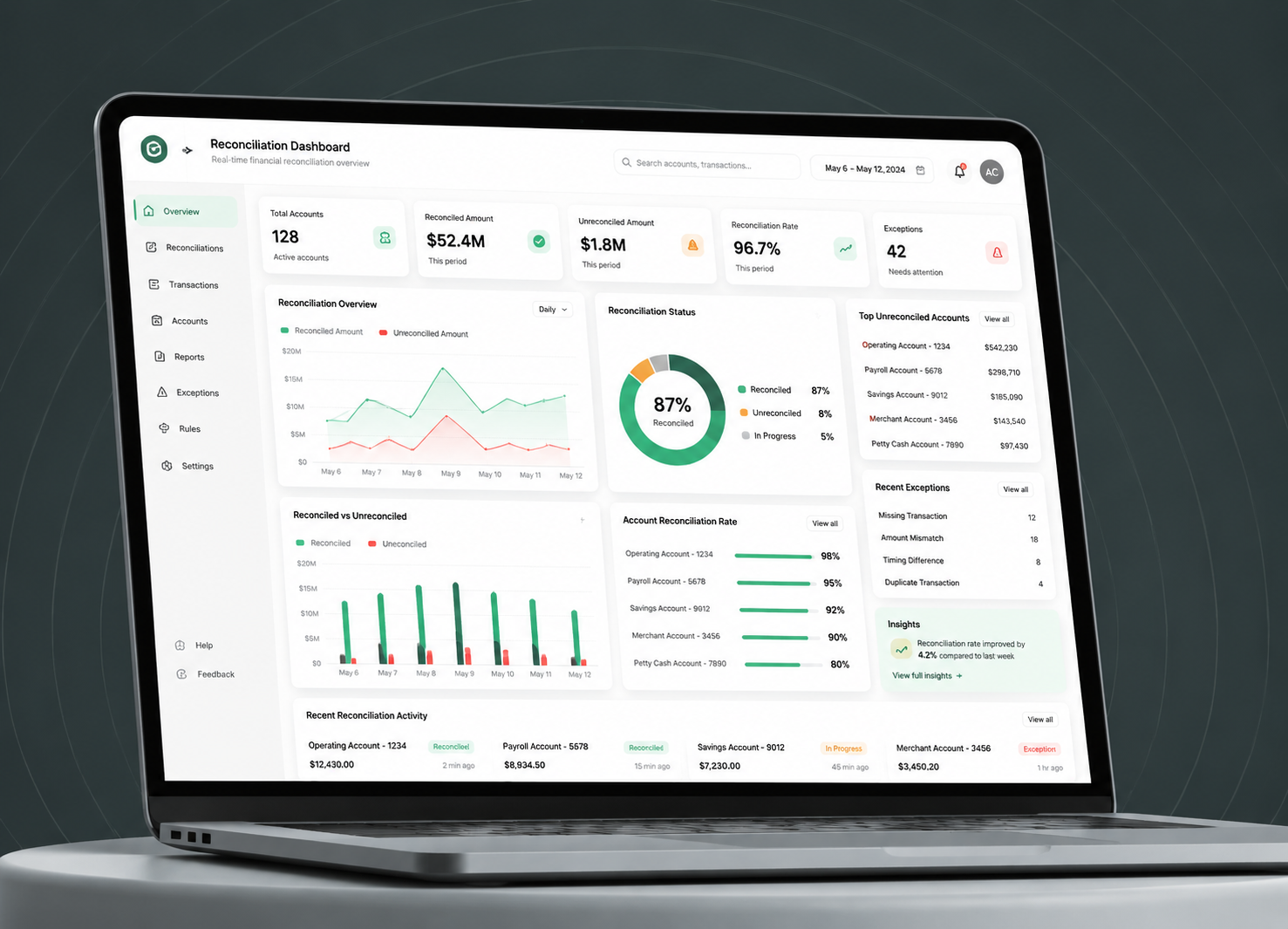
Autonomous reconciliation for a payments processor
Resolved 89% of reconciliation breaks without a human, every action logged for audit.
Read the full case studyGet a senior architect on the call, first time, every time.
No SDR gauntlet. 30 minutes with an engineer who can scope the problem, name the risks, and give you an honest feasibility call.