
Shipping-document extraction for a logistics operator
Achieved 94% straight-through extraction on bills of lading and customs paperwork for a logistics operator.
94%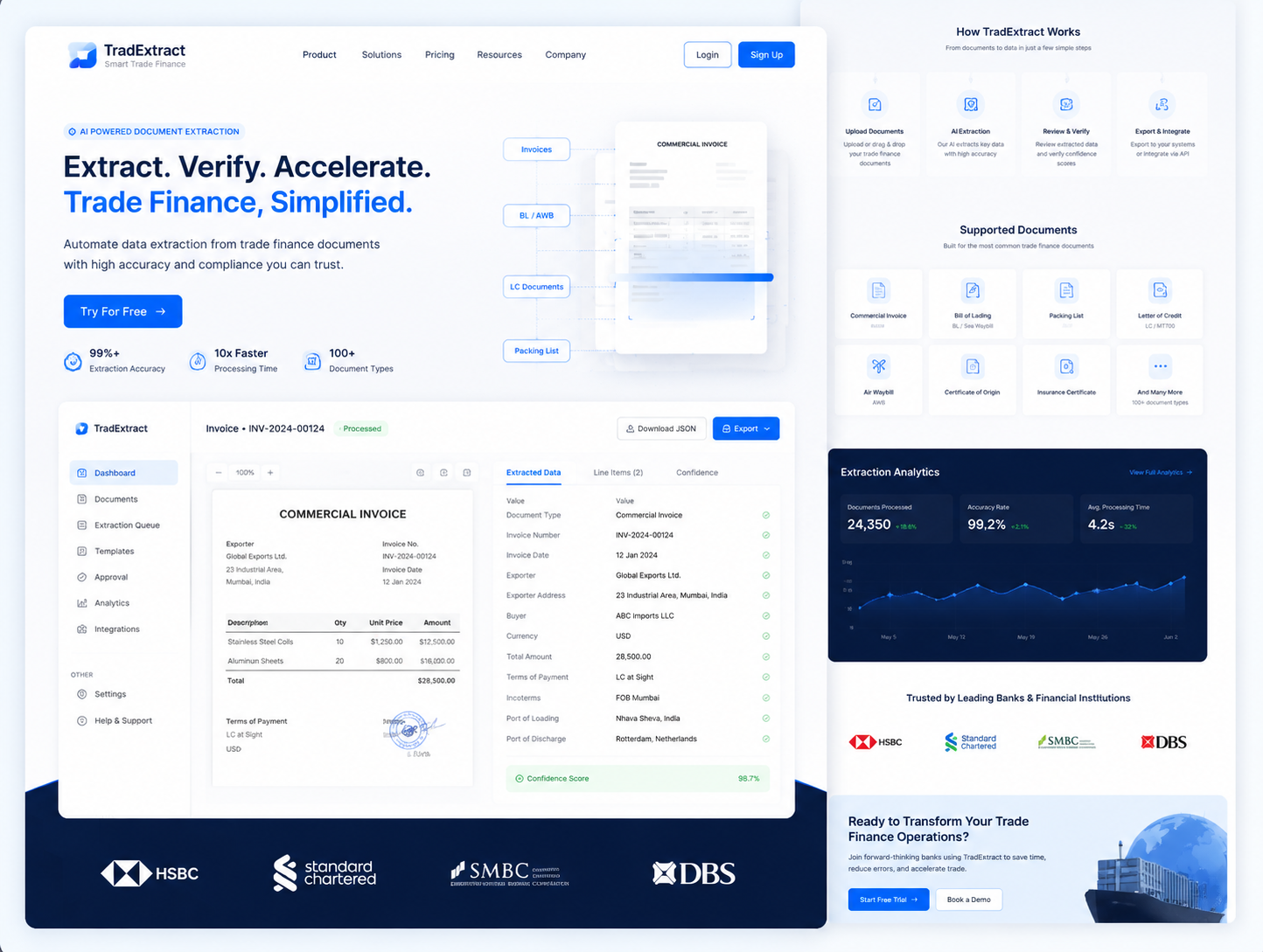
Problem, approach, and the outcome
The client is a UK logistics operator handling international consignments, where paperwork accuracy directly affects customs clearance and delivery times. A single keying error can hold a shipment at the border.
Their back office spent significant effort re-keying documents that arrived in wildly inconsistent formats, and that manual step was both a cost and a source of downstream errors.
Shipping documents arrived as scans and phone photos in dozens of inconsistent formats, and re-keying them by hand delayed every consignment. The variety alone defeated simple template-based tools that only work on clean, predictable inputs.
Manual entry introduced errors that surfaced downstream as customs holds and disputes, each one expensive to unwind and damaging to delivery promises. A mistake made in seconds could cost days to resolve at the border.
The operator needed reliable extraction across messy real-world inputs, not a demo that only worked on pristine templates, but something robust enough to trust on the documents they actually receive every day.
We built a layout-aware extraction pipeline that reads the key fields regardless of format, using document structure rather than fixed positions. That structural understanding is what lets it handle the format variety that breaks template-based approaches.
Every extracted value is cross-checked against the consignment record, so mismatches are caught immediately instead of surfacing at the border as a hold. Validation at the point of extraction turns errors into caught exceptions rather than downstream incidents.
Low-confidence pages route to a reviewer with the uncertain fields highlighted, keeping the automated output trustworthy without slowing the clean cases. We tuned it on the operator's own document mix, so accuracy reflected the formats they genuinely receive rather than an idealised sample.
- 94% straight-through field extraction
- Cross-checked against the consignment record
- Re-keying effort down by four fifths
- Customs holds from keying errors materially reduced
More AI & Machine Learning case studies
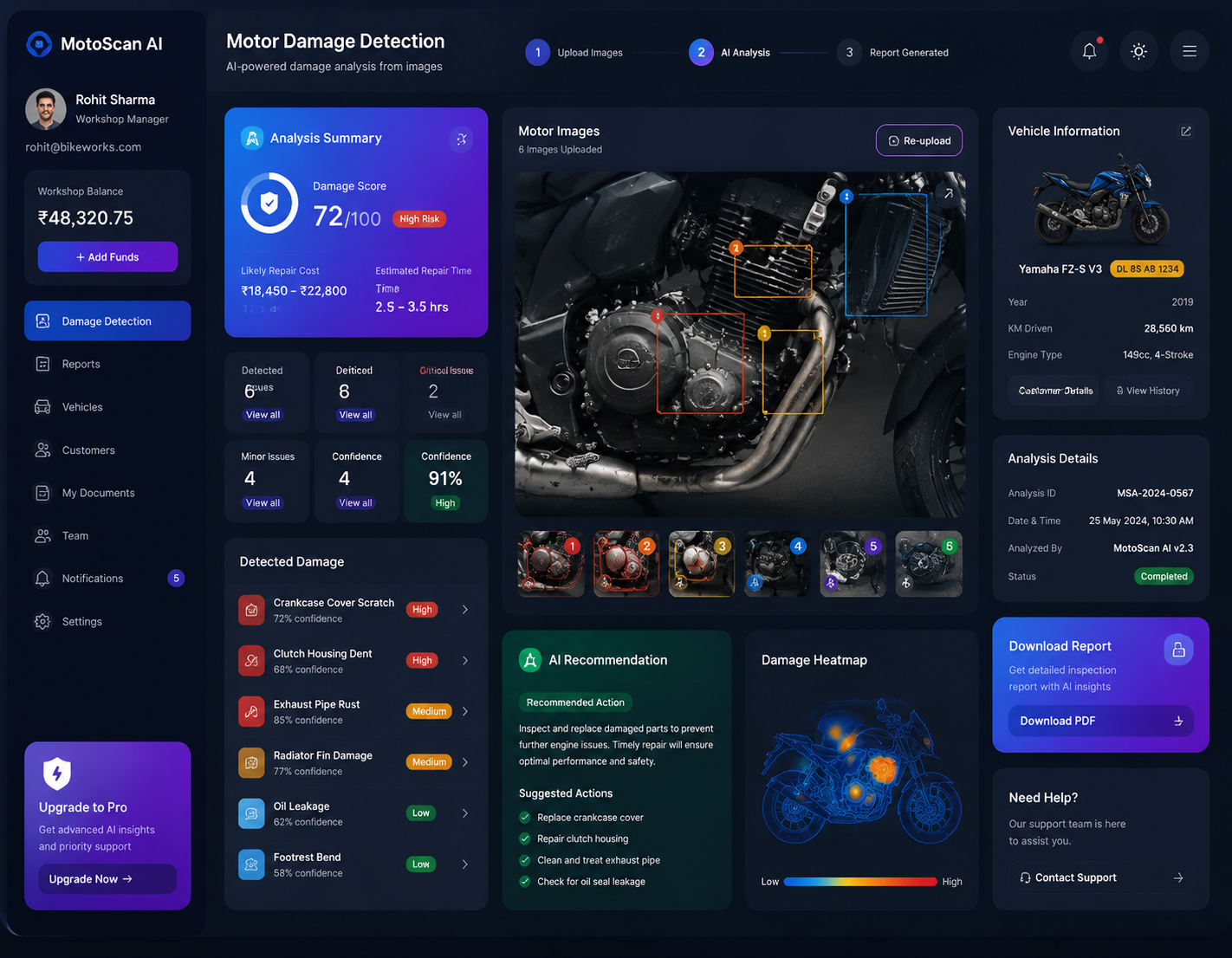
Motor damage assessment from photos for an insurer
Settled 47% of motor claims from images alone, with fraud flags surfaced inline.
Read the full case study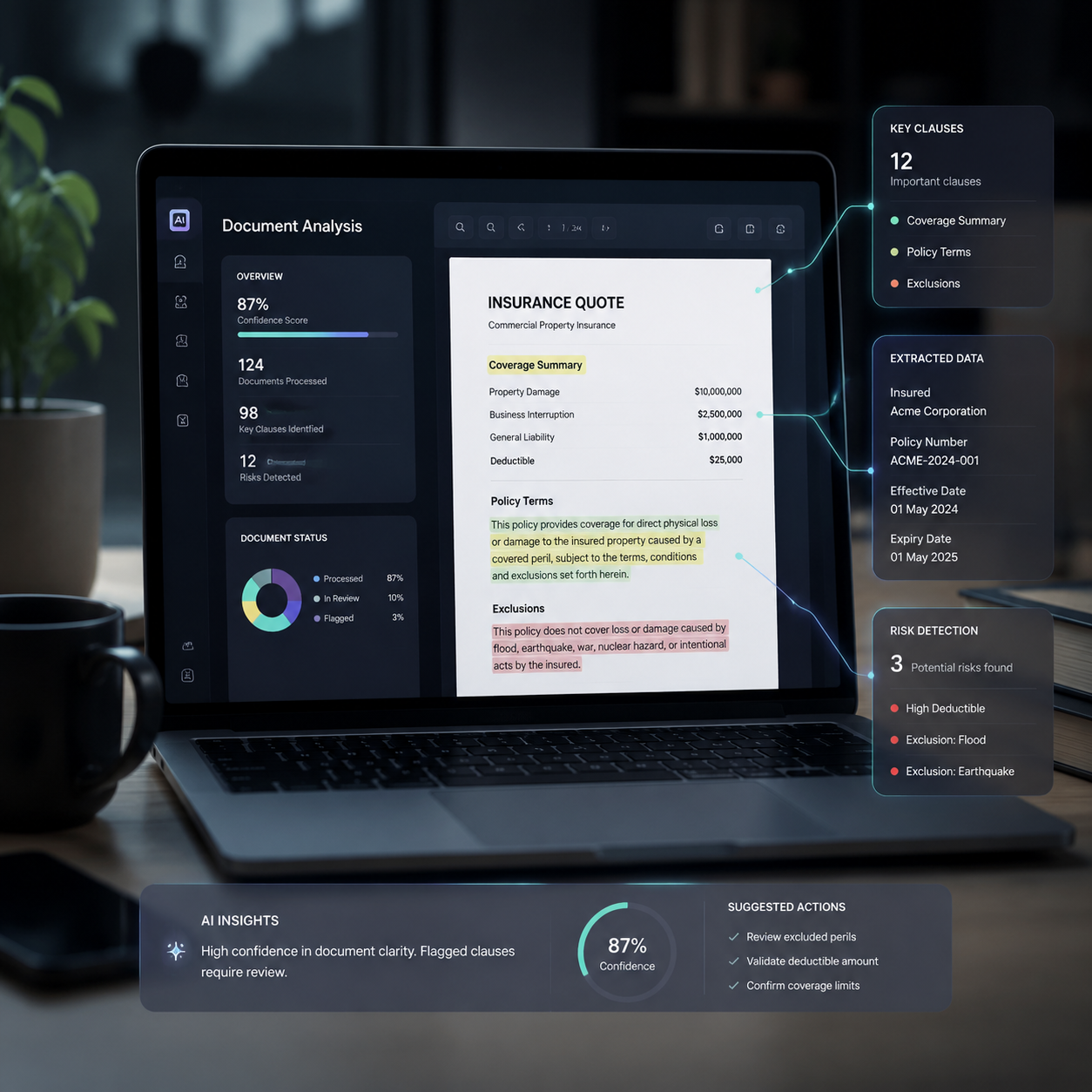
Underwriting copilot for a speciality insurer
Drafted first-pass quotes from submission packs 3.1x faster, every clause cited back to the wording it came from.
Read the full case study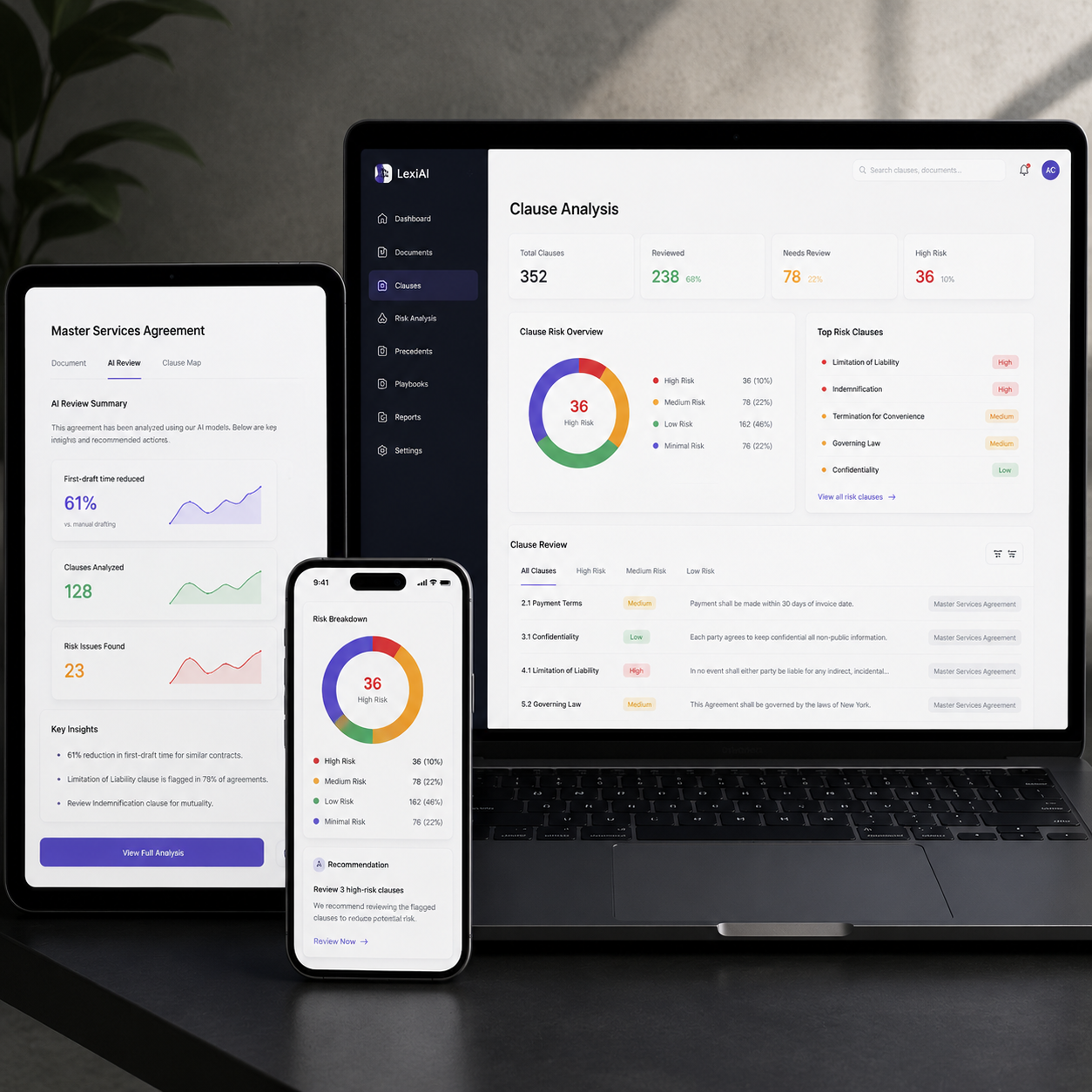
Clause-level contract drafting for a commercial law firm
Cut first-draft time on regulated commercial contracts by 61%, each clause traceable to firm precedent.
Read the full case studyGet a senior architect on the call, first time, every time.
No SDR gauntlet. 30 minutes with an engineer who can scope the problem, name the risks, and give you an honest feasibility call.