
Explainable credit scoring for a digital lender
Lifted approval rates 31% at constant loss, every decision reason-coded for the FCA.
31%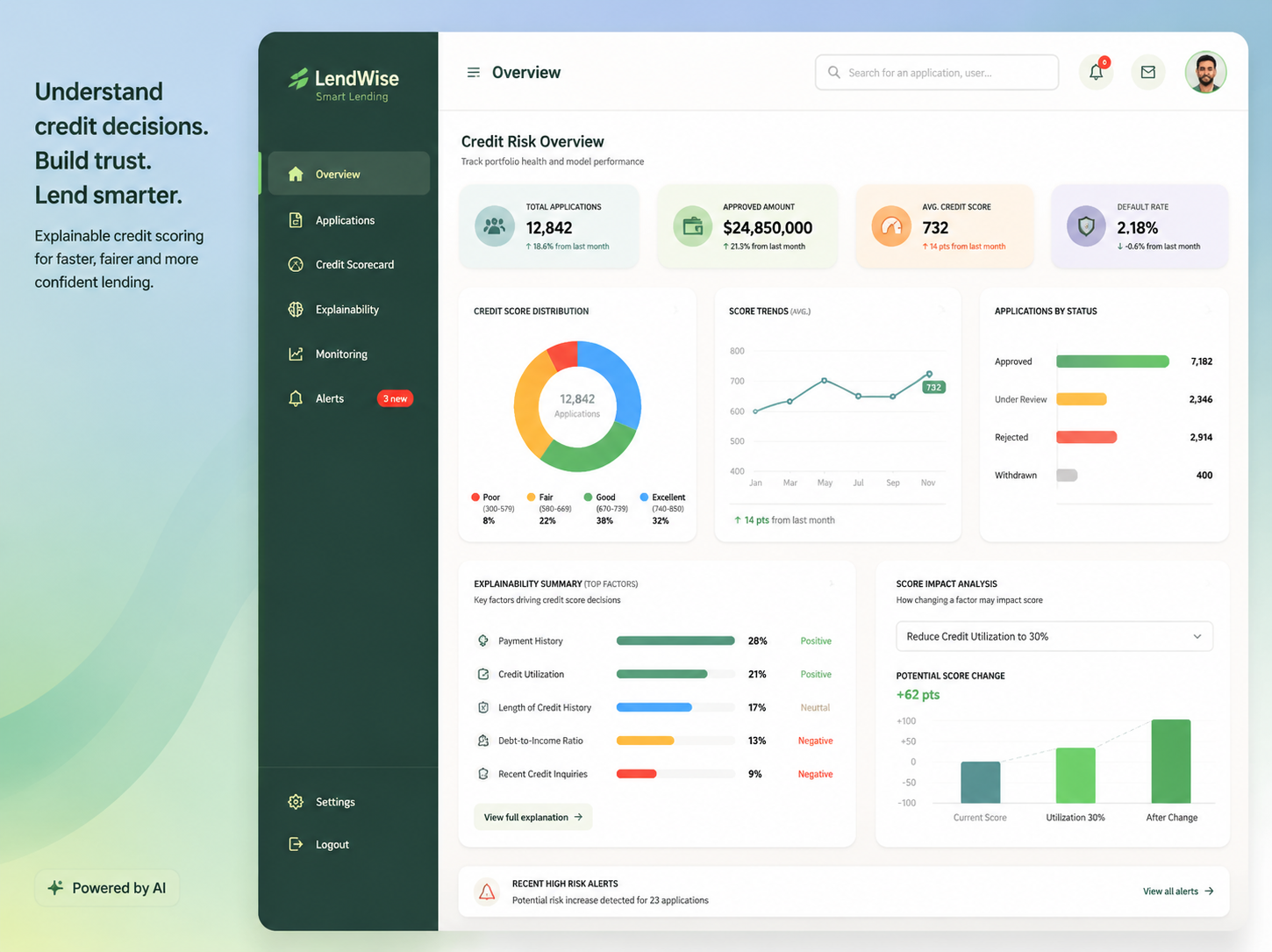
Problem, approach, and the outcome
The client is a UK digital lender competing on speed and rate in a market where approval decisions are made in seconds. Under FCA supervision, every one of those decisions has to be fair, explainable, and defensible.
They were growing fast but constrained by a cautious legacy decisioning setup, and knew that smarter risk assessment was the key to unlocking more good lending without taking on more loss.
A conservative rules engine was turning away creditworthy borrowers, leaving growth on the table in a market where approval speed and rate win customers. Every good applicant declined was a customer handed to a competitor.
The regulator required a clear, defensible reason for every decline, so a higher-accuracy model that could not explain itself was simply unusable, however good its numbers looked. Explainability was a gating requirement, not a bonus.
The lender needed more approvals without loosening its loss appetite or its compliance posture, a harder problem than raw accuracy, because it meant improving discrimination and transparency at the same time.
We built a gradient-boosted scorecard that materially improved on the rules engine's discrimination, then wrapped it in per-decision reason codes so every accept and decline came with a plain-language explanation. Performance and explainability were treated as a single objective, not a trade-off.
We back-tested against 24 months of real outcomes to confirm the loss trade-off held before anything went live, so the approval uplift was proven against history rather than promised. Drift and disparate-impact monitoring were built into the pipeline from day one, not bolted on later.
The model shipped with a challenger framework, so future improvements could be proven against the incumbent before promotion. That gives the lender a safe, repeatable way to keep getting better without risking a regression into worse lending.
- 31% higher approval rate at constant loss
- Reason code on every accept and decline
- Disparate-impact testing built into the pipeline
- Drift monitoring and a challenger framework in production from launch
More AI & Machine Learning case studies
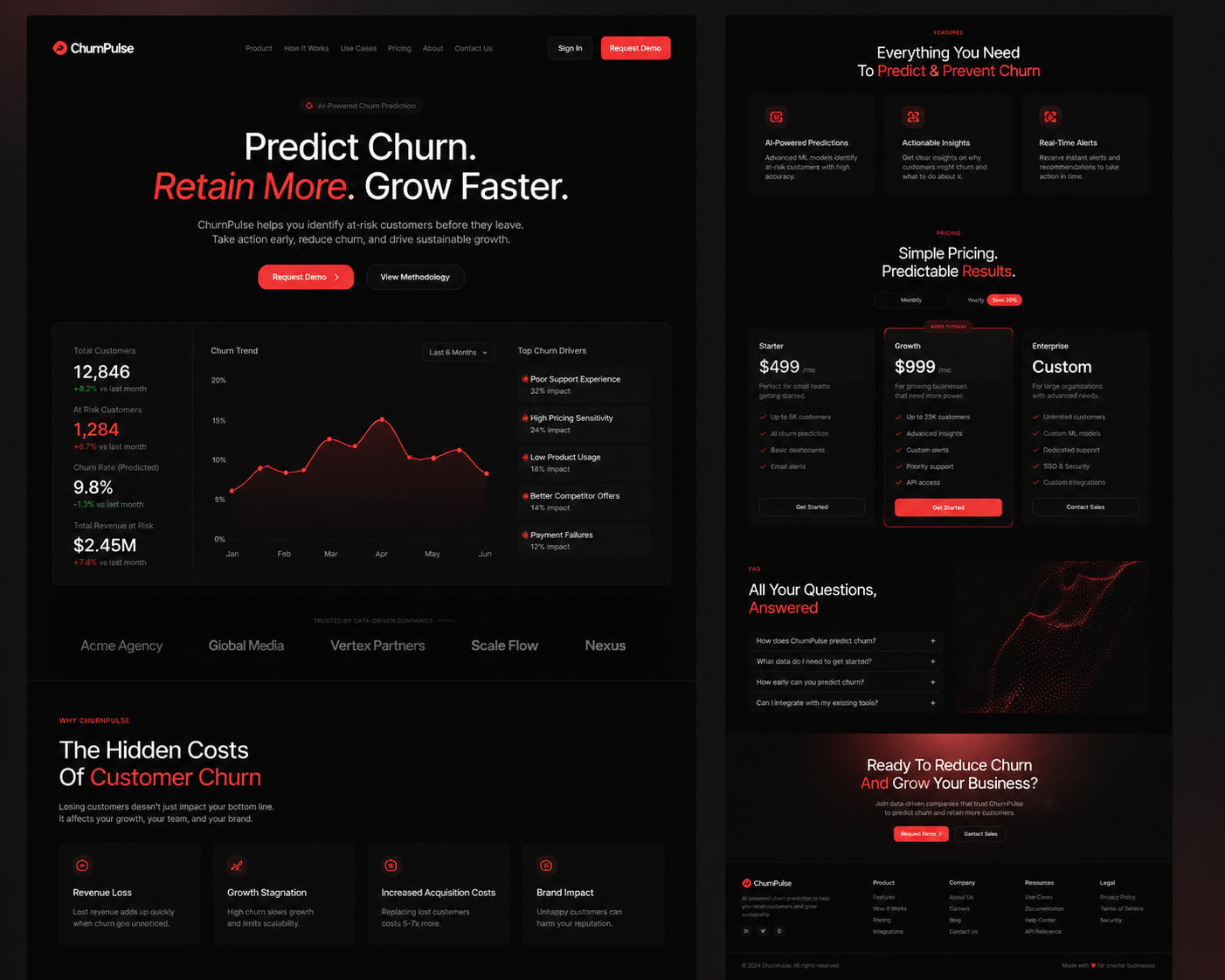
Churn prediction for a foodtech subscription platform
Cut voluntary churn 18% in two quarters with next-best-action scoring for a meal-subscription platform.
Read the full case study
Demand forecasting for a grocery retailer
Cut waste 22% across 900 stores with SKU-level probabilistic forecasts.
Read the full case study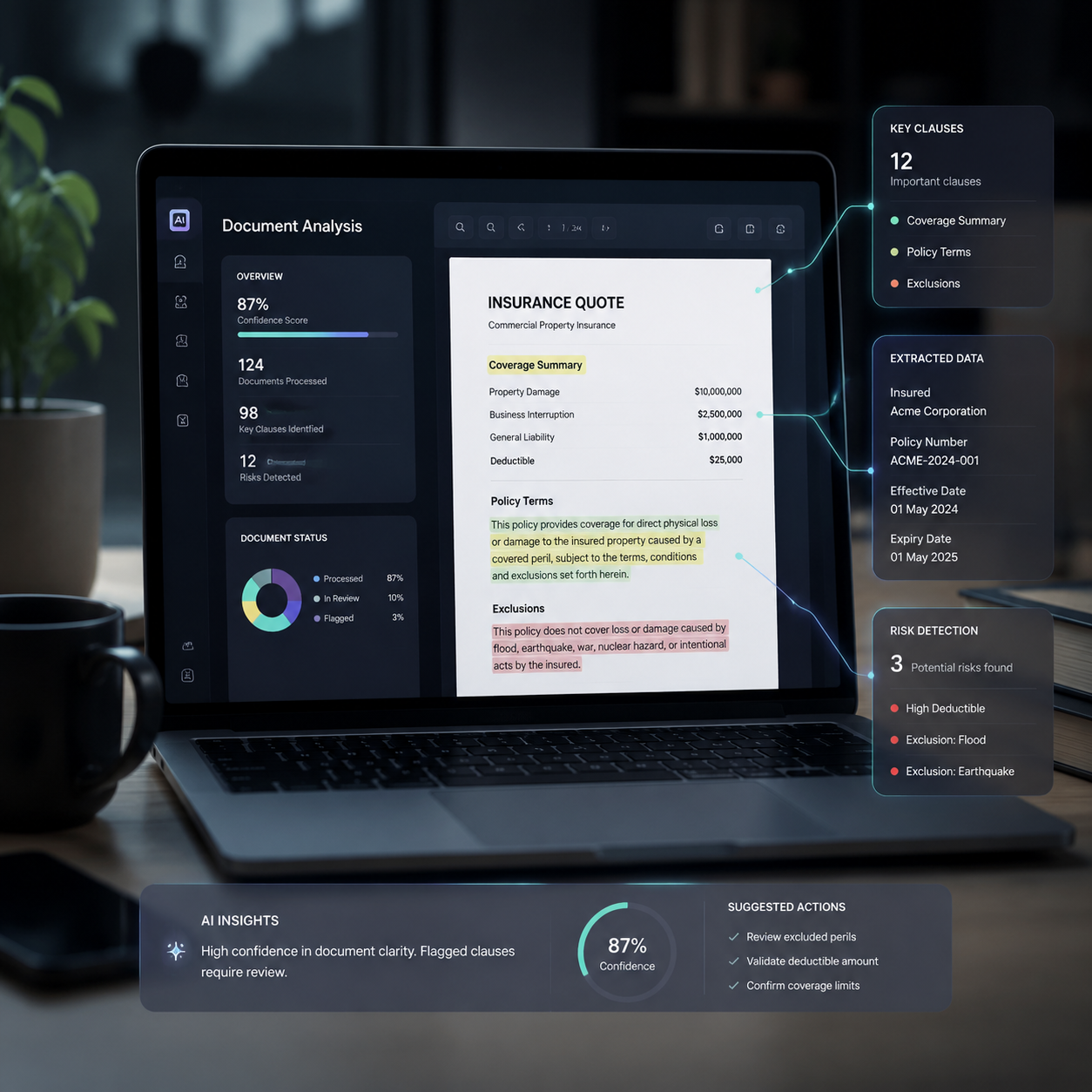
Underwriting copilot for a speciality insurer
Drafted first-pass quotes from submission packs 3.1x faster, every clause cited back to the wording it came from.
Read the full case studyGet a senior architect on the call, first time, every time.
No SDR gauntlet. 30 minutes with an engineer who can scope the problem, name the risks, and give you an honest feasibility call.