
Complaints triage and root-cause tagging for a government department
Auto-classified 58% of citizen complaints to root cause, feeding the department's reporting directly.
58%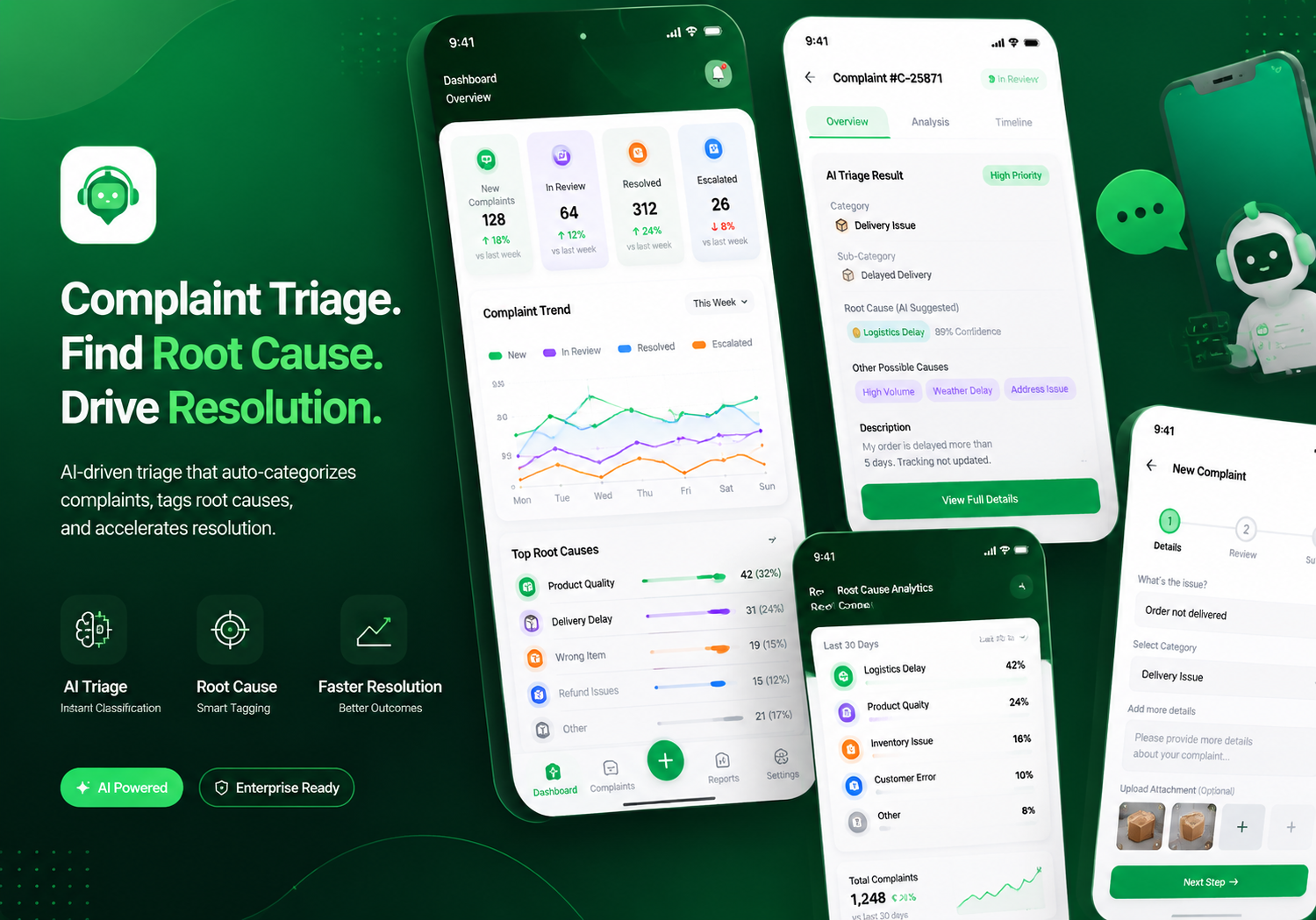
Problem, approach, and the outcome
The client is a UK government department handling a high volume of citizen complaints across a public-facing service. As a public body, it is accountable for how it categorises and responds to those complaints, and for the accuracy of the reporting it produces.
Leadership needed a trustworthy view of why complaints arose in order to fix systemic problems, but the manual tagging process behind that view was too inconsistent to rely on.
Citizen complaints arrived as free text and were tagged inconsistently by hand, so no two caseworkers categorised the same issue the same way. The same underlying problem could end up under three different labels depending on who processed it.
As a result, the root-cause picture leadership needed to fix systemic problems was never trustworthy, and assembling it swallowed analyst time better spent elsewhere. Decisions were being made on a foundation nobody fully believed.
Under public-sector scrutiny, the department could not defend numbers assembled from inconsistent manual tagging. Consistency was not just an efficiency issue: it was a matter of accountability.
We built a classifier that maps free-text complaints onto a governed root-cause taxonomy, so the same issue lands in the same category every time. Consistency was the whole point: a trustworthy picture requires a stable definition of what each category means.
A confidence threshold routes uncertain cases to a caseworker rather than forcing a guess, so the automated tags stay trustworthy and edge cases still get human judgement. Automation handles the clear cases; people handle the genuinely ambiguous ones.
The output feeds departmental reporting directly, collapsing a manual assembly step that used to consume analyst time. We built the taxonomy with the policy team, so the categories matched how leadership actually reasons about the service rather than an abstract scheme.
- 58% of complaints auto-classified to root cause
- Consistent taxonomy feeding department reporting
- Uncertain cases routed to a caseworker, not guessed
- Manual report assembly replaced by a direct data feed
More AI & Machine Learning case studies
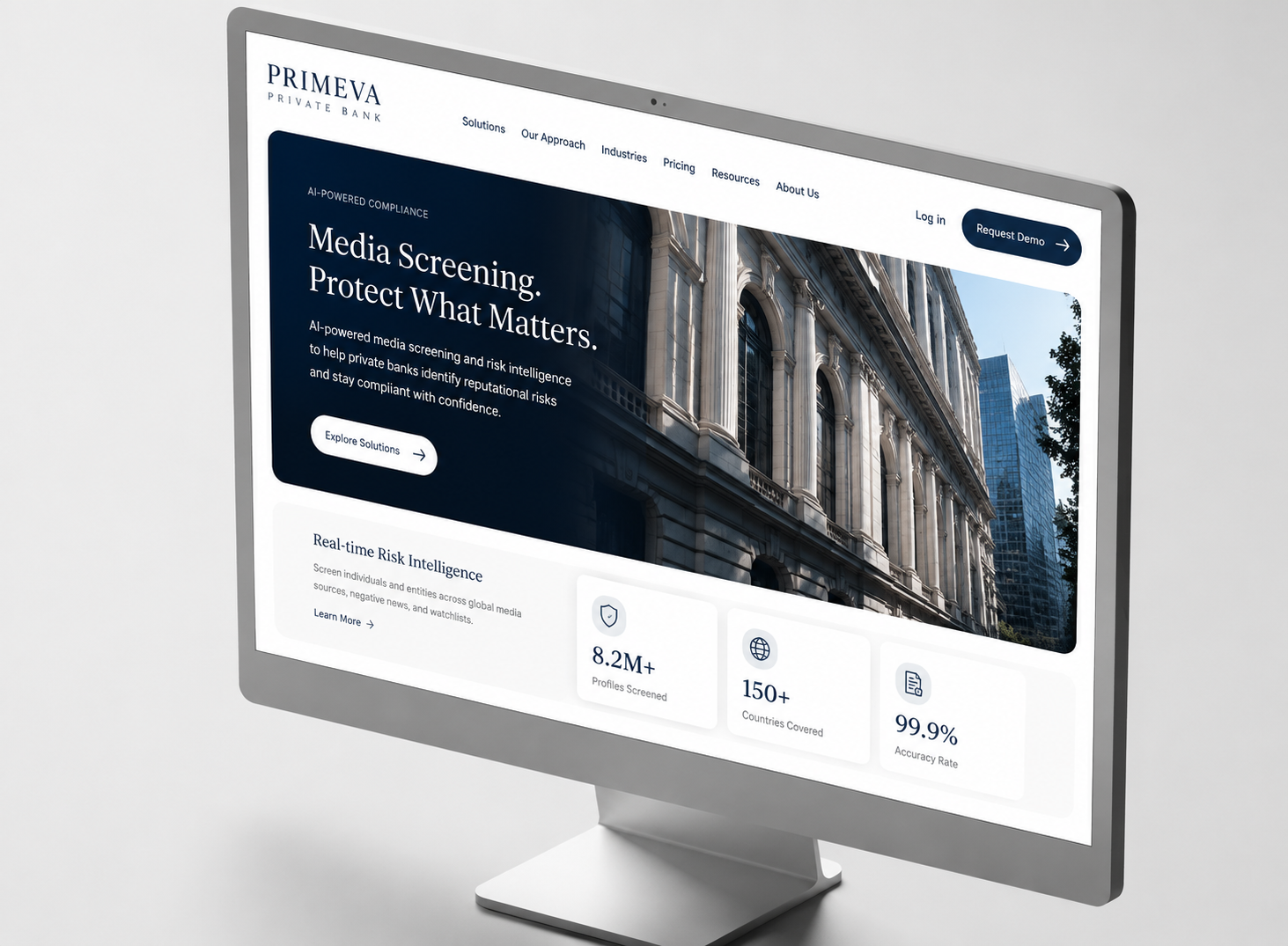
Adverse-media screening for a private bank
Screened 12x more names at a lower false-positive rate, each hit evidenced.
Read the full case study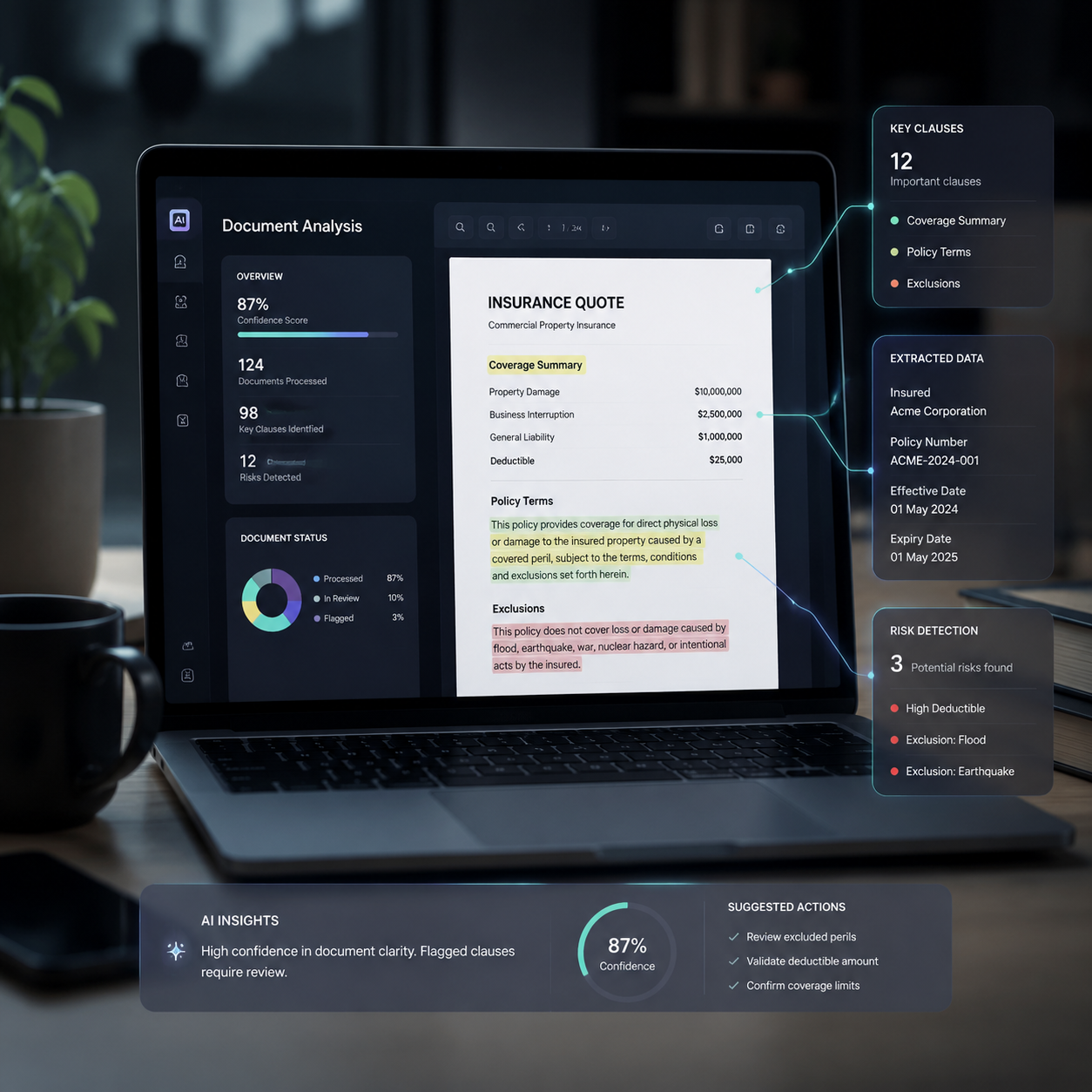
Underwriting copilot for a speciality insurer
Drafted first-pass quotes from submission packs 3.1x faster, every clause cited back to the wording it came from.
Read the full case study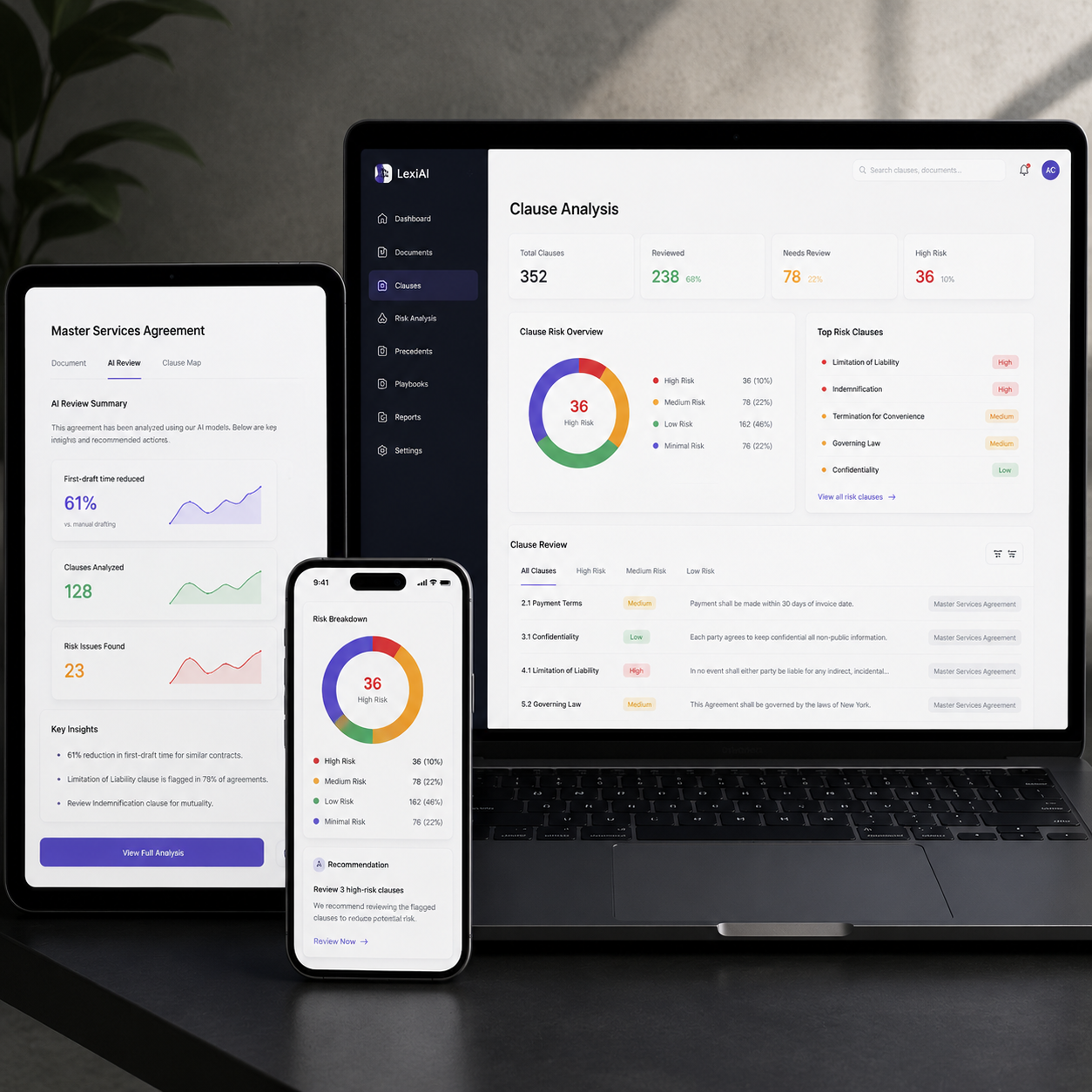
Clause-level contract drafting for a commercial law firm
Cut first-draft time on regulated commercial contracts by 61%, each clause traceable to firm precedent.
Read the full case studyGet a senior architect on the call, first time, every time.
No SDR gauntlet. 30 minutes with an engineer who can scope the problem, name the risks, and give you an honest feasibility call.